Showing posts with label Trioplan. Show all posts

Ihagee Exa

  • Version: 4
  • Serial No: 504555
  • Manufactured: 1957
  • Manufacturer: Ihagee, Dresden, Germany
  • Shutter: “Guillotine-type” Exa specialty
  • Speeds: 1/150, 1/100, 1/50, 1/25, B
  • Lens: Meyer-Optik Görlitz Trioplan 1:2.9/50
  • Lens No:1996718
  • Apertures:2.9, 4, 5.6, 8. 11. 16. 22
  • Lens mount: Ihagee/Exakta/Exa bayonet
  • Last CLA: unknown
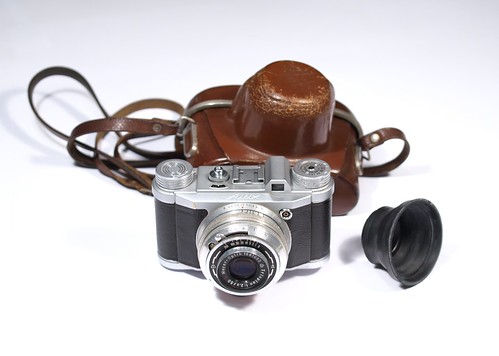
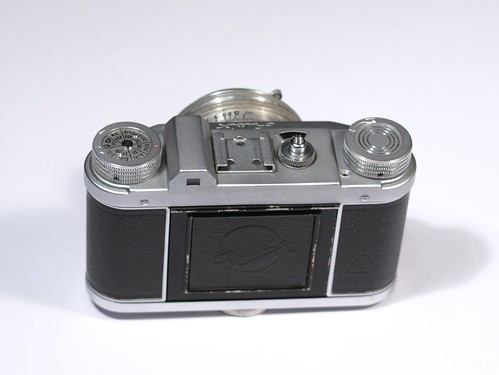
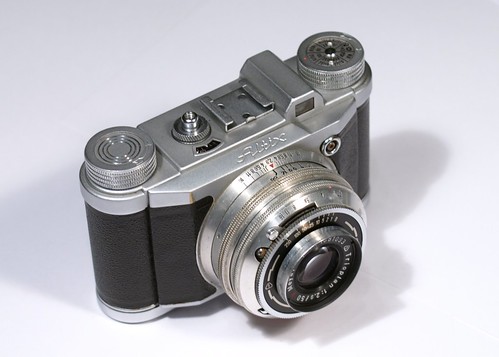
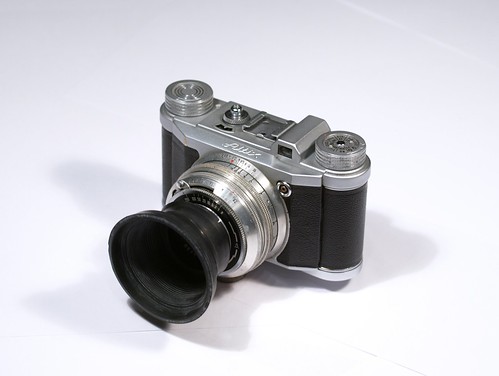
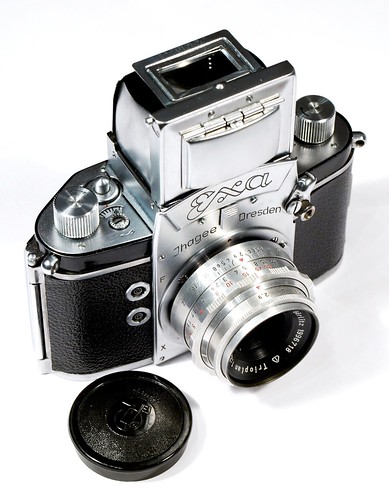
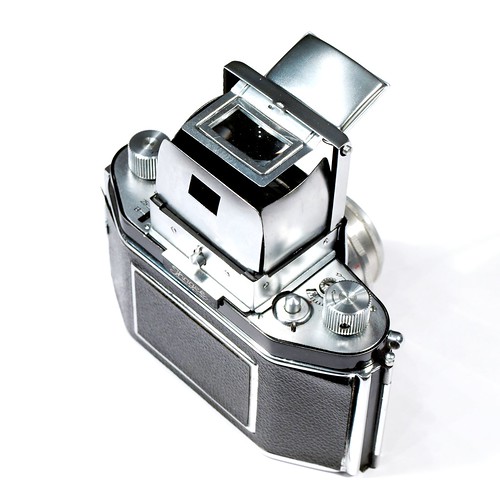
This is one of the best looking things ever made. No doubt about it. Look at this picture. Something you want to possess immediately, isn’t it? The good news is that you can buy one for less than EUR 50 on ebay.

Ihagee Exa

This camera is the older brother of the Exa Ia, I’m going to compare with. People often call it Exa 0 to distinguish it from the latter I and II models.

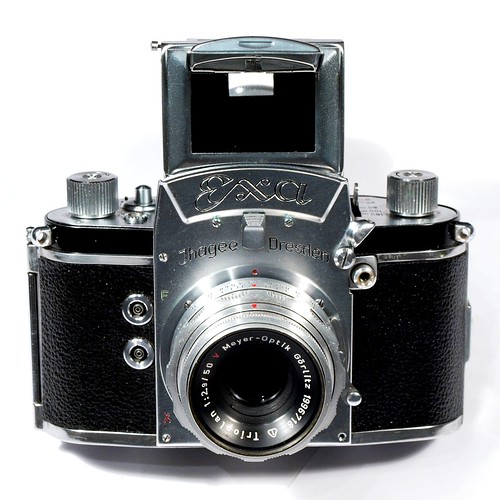
The most striking difference is the look. The Ia was a nice camera but the 0 is simply beautiful. Sparkling metal everywhere, knobs and buttons, and this nice engraving on the front plate, all in all, this camera is a dangerous seducer.
Ihagee Exa

The cheap feel of the Ia is not present when you hold the Exa 0 in your hand. It feels solid and precise. And it’s so damn good looking that you tend to forgive anything anyway. Even the sound of the shutter which is the same empty can noise as of the Exa Ia. But don’t hear, look!

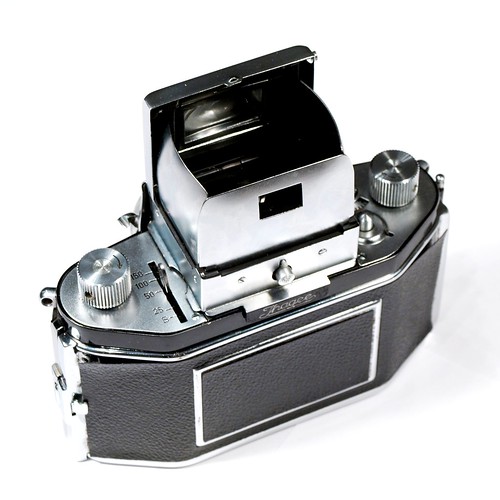
There is charm everywhere on this camera. You can set the shutter speed with a stick for example. Isn’t it delightful? Of course it is.
Ihagee Exa

Now let’s see the handling. This camera have a Trioplan lens which is great but it doesn’t include automatic aperture stop down so you have to set focus on maximum aperture and stop down manually before the exposition. Another issue is the finder. There is no focusing aid in the prism so using it is more difficult than the finder of the Ia which is brighter, have better loupe and gives us the comfort of a microprism. So the Ia is much easier and faster to use.

But the Exa 0 is a piece of gem and it even provides us with a “sport finder”. Or at least a hole that can be called this way. It cannot be used to focus or set anything but it’s so nice that it even exists.
Ihagee Exa

Ihagee Exa

Maybe beauty is not everything but it is almost. That’s why we love this camera. Finally some words about the lens. I love the Trioplans since I tried one on my Altix. They render beautifully, especially compared with the Domiplans. The Domiplans are boring, the images are unsharp and the colors need lots of digital post-processing not to be dead-grey. The best you can tell is that they are reliable and even the old ones are in generally good shape. But don’t go for it. There is a large lens selection for the Exas. Tessars for example. But the best choice can be the Trioplan. It is a mid-priced lens and this suits well for the cheap-SLR concept of the Exa family. Trioplan is the best on the mid-priced lens palette, standing out the same way as the Exa stands out from the other cameras of its price range. Or even more.

Some test shots in BW
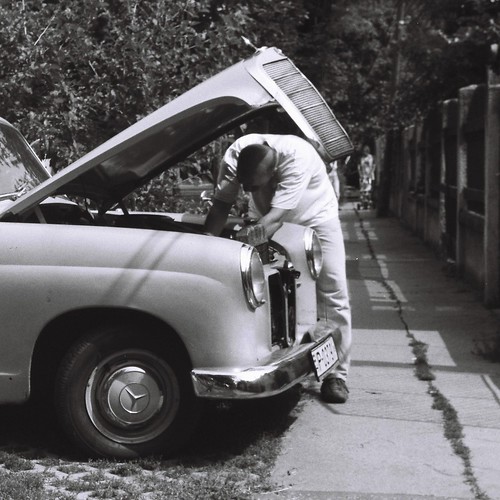
Before hitting the road

On the road

And here is the undeniable evidence of the superiority of the Trioplan lens. Look at them in full res. Look at the textures. And the bokeh. Crisp like nothing else. I love it.

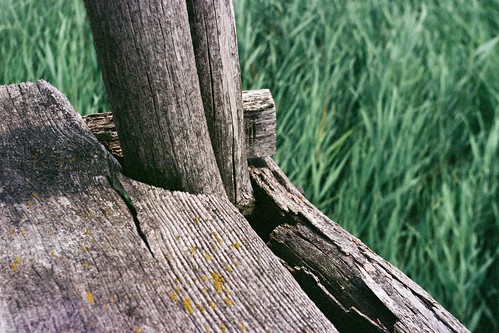
I'm in love with Trioplan - 1

I'm in love with Trioplan - 2

She's out of focus

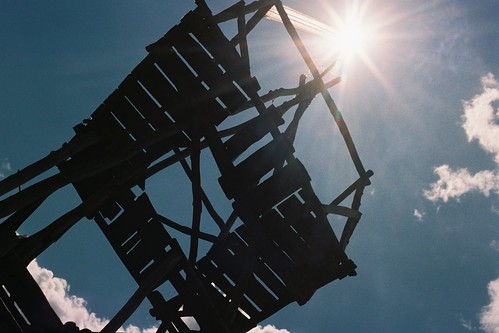
Lookout tower

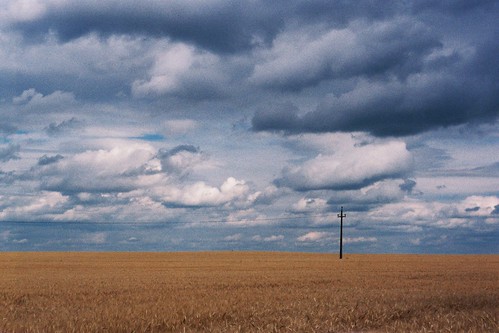
Wheat


Altix IV

  • Type: version 2 type B
  • Serial No: 130546
  • Manufactured: 1952
  • Manufacturer: Eho-Altissa, later VEB-Altissa Kamera Werk, Dresden, Germany
  • Shutter: Vebur
  • Shutter speeds: 1, 1/2, 1/5, 1/10, 1/25, 1/50, 1/100, 1/250
  • Lens: Meyer-Optik - Trioplan 1:2.9/50
  • Apertures: between 2.9 and 16
  • Lens No:1681093
  • Lens mount: fixed
  • Last CLA: 06/2011

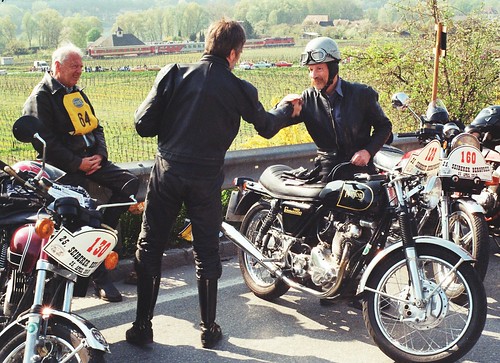
I had bought this camera to have something which I could take with me on my motorbike and I didn’t mind to wreck. It was cheap. It was ugly on the pictures. I didn’t care about the look just wanted something simple and functioning. It cost less than 15 EUR.

Altix IV

As for the functionality, it provides with the bare minimum: small aperture and speed range, separate film winding and shutter cocking, no metering at all, you have to use a separate light meter for the exposition settings and a good guess-o-meter for the distances. Sounds not too handy, right?

Altix IV

The first thing I noticed when I finally got it was how small it was. And how seriously good looking. Far better than on the pictures. It was a real surprise for me.

Altix IV

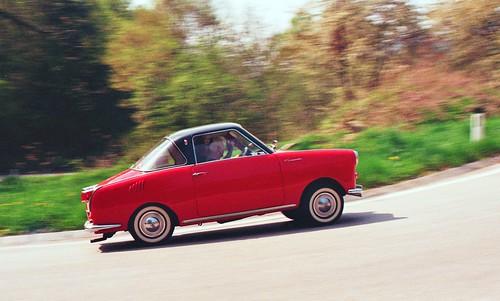
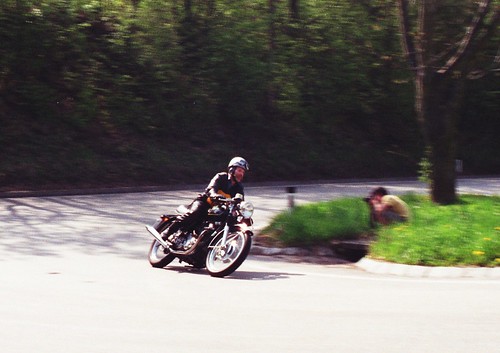
I took it to the International Seiberer Bergpreis oldtimer race to have an old camera with me. It was sunny so I didn’t have to use my light meter just set f/16 and 1/100. I used range focusing to forecast the distance. Winded the film, cocked the shutter and shot. Modified the distance and shot again. And again and again. I fell in love with it for the first roll.

Altix IV

The rings and knobs are ergonomically designed so the handling feels absolutely natural. The viewfinder is surprisingly bright and useful. The lack of metering gives you speed. You have to calculate and set everything in advance so you won’t miss the right moment of exposition. It turned to be the ideal camera for the oldtimer race. I could shoot 2 or more pictures of a car or a motorcycle taking the curve. Here are some pictures of the first two rolls:

Goggomobil

Racers

Oldtimer race

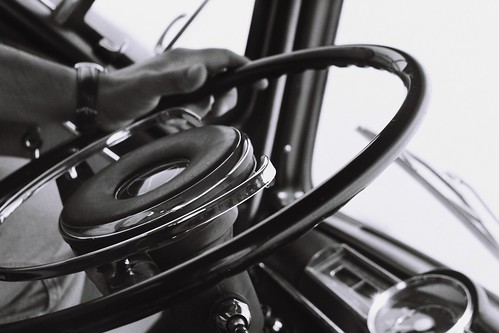
Oldtimer bus race

And now some words on the Trioplan lens. It has 3 elements. It was designed to be an affordable alternative of the more sophisticated 5 elements lenses. Well, its designer made a terrific job. It renders sharp and clear images. I simply love it.

The small Altix quickly became one of my favorite cameras. It’s so ergonomic that it feels almost like a part of my body. It’s a great performer if you can prepare for the light conditions with the appropriate film speed. However, the absence of a rangefinder makes it very difficult to use if it comes to wider aperture settings.