FED-2

Two FED-2s together

Great cameras have great stories behind them and this applies to the FED-2 which was named after Felix Edmundovich Dzerzhinsky alias Iron Felix. Iron Felix wasn’t a cartoon superhero but he was the founder of the fearful Bolshevik secret police called Vecheka, well-known from its brutality. It was the ancestor of the latter KGB. He got the assignment directly from Vladimir Ilyich Lenin.


F.E. Dzerzhinsky

Felix Edmundovich Dzerzhinsky wasn’t an optical engineer. He wasn’t a photographer either. But he must have been quite influential because they named six towns after him, and, most importantly, a labor commune in Kharkov, Ukraine. This rehabilitation commune of abandoned youths (or prison of young criminals, mostly 13-17 year old boys and girls, as the rumor says) was led by the reputed Soviet pedagogue, director Anton Semyonovich Makarenko, famous after his theory of collective discipline. Here they started to manufacture the Soviet Union’s first 35mm camera, the FED, during Stalin’s push for the industrial and economic transformation of Russia.
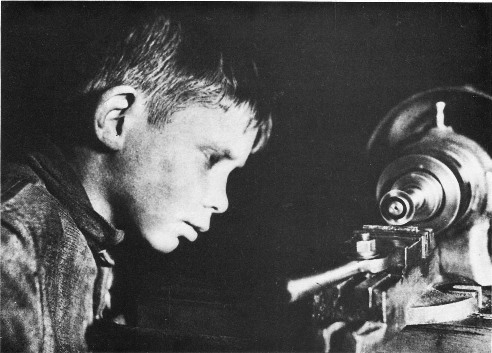

Young communards working in the F. E. Dzerzhinsky Commune - 1934

The FED was based on the Leica II(D) - the Russians bought the license from the German company for the camera body, the collapsible Elmar lens and the 35mm Leica film cassette in 1932. But they didn’t just copy it, they made some developments as well. Soon, the FED-2 was born. It wasn’t a simple Leica replica anymore.

FED-2 type B2


  • Type: B2
  • Serial No: 153914
  • Manufactured: 1956 - 1958
  • Manufacturer: Felix Edmundovich Dzerzhinsky Labour Commune, Kharkov, Ukraine, SSSR
  • Shutter: curtain
  • Speeds: 1/25, 1/50, 1/100, 1/250, 1/500 and B
  • Lens: FED 1:3,5 F=50mm
  • Apertures: 3,5 - 16 without stops
  • Lens No: 280375
  • Lens mount: M39
  • Last CLA: 06/2010

The FED-2 got a large, Contax-like 67mm coupled rangefinder and a Contax-like film loading mechanism while keeping the ergonomic Leica design and the Leica shutter. The best from both world, one may say. The FED-2 is therefore a very comfortable and surprisingly usable camera.

FED-2 type B2

I love the way you have to cock the curtain shutter: you can feel the curtain rolling to the spool. The exposition feels a bit clumsy as the curtains roll down but in fact, the shutter is quite precise. The whole process is simply lovely.

FED-2 type B2

Despite the compact look, the FED-2 is heavy and solid as a rock so you can use it for self-defending purposes in case of need. The knobs rotate a bit rough, you can feel that it’s a Russian piece of machinery of the not-too-precise-but-surviving-everything kind.

FED-2 type B2

FED-2 type B2

The camera design is so simple that it’s almost impossible to wreck and cheap to get repaired. They made more than one million FED-2s so it’s not too difficult to find spare parts. However, parts of different cameras are not necessarily interchangeable from two reasons: firstly, there were about 30 more or less different types of it, secondly, they were made by hand so the sizes and the location of screw holes may differ a little.

Rest

The collapsible FED lens is not the sharpest one I ever had, but it’s a big fun to use it. First, you have to pull it out of the camera body, then you have to twist it while pulling to lock it. Don’t forget to push it back a little to check you locked it properly otherwise you can get an out of focus image like this:

Landscape out of focus

You can call it artistic anyway.

Now let’s see the other one:

FED-2 type D6

  • Type: D6
  • Serial No: 2343868
  • Manufactured: 1959 - 1968
  • Manufacturer: Felix Edmundovich Dzerzhinsky Labour Commune, Kharkov, Ukraine, SSSR
  • Shutter: curtain
  • Speeds: 1/30, 1/60, 1/125, 1/250, 1/500 and B
  • Lens: FED I-26m 2,8/52
  • Apertures: 2.8 - 22 without stops
  • Lens No: 1581284
  • Lens mount: M39
  • Last CLA: 06/2010

I ‘ve got this camera from a girl working at the photo lab when I took a few rolls of film there for development. She was enthusiastic about digital photography and didn’t understand why I used a film camera. This FED-2 was her grandfather’s camera but she never used it and wanted it to be in good hands so she handed it over to me. I’ve got it CLA-d and promised to take care of it. He made me promise to show the first roll taken with it but I couldn’t find her at the shop anymore despite that I tried it several times.

FED-2 type D6

This later type FED-2 feels to be exactly as well-balanced in the hand as the older one, with the same vulcanite exterior which gives a good grip. The main difference is that the knobs work more easily and more precisely. There is a minor change in shutter speeds which I wouldn’t call an enhancement: 25, 50 and 100 was replaced by 30, 60 and 125. The shutter itself is a newer design: it’s not as vulnerable to improper handling as the older ones were.

FED-2 type D6

The pretty collapsible FED lens was replaced by a definitely better performing but less charming Industar 26 labeled as FED I-26m with a strange 52mm focal lenght. It is sharper and renders definitely better pictures than its collapsible brother.

Bales

The widest aperture

Elisabeth Bridge

St. Stephen's Basilica

Here are two really important warnings if you want to use a FED:
  1. Always cock the shutter before setting the speed. Never set the speed first or you damage the shutter permanently. (Some later types are not vulnerable to this but you’d better not count on it.)
  2. Never turn the lens to the sun. It will burn holes into the shutter curtain. Use lens cap every time.
The FED-2 is a popular camera among vintage camera users because it’s cheap, handy, good looking and has a special story behind. You will find lots of information about it on the net. Here are some starting points:

Exa Ia

  • Type: Ia
  • Serial No: 379142
  • Manufactured: 1965-1977
  • Manufacturer: Ihagee, Dresden, Germany
  • Shutter: “guillotine-type” focal plane
  • Speeds: 1/30, 1/60, 1/125, 1/175 and B
  • Lens: Meyer-Optik Görlitz Domiplan 2.8/50
  • Apertures: 2.8 - 22 in half stops
  • Lens No:5116628
  • Lens mount: Ihagee/Exakta/Exa bayonet
  • Last CLA: unknown

The Exa Ia is a cheap and simple SLR camera system from Ihagee with interchangeable lens, interchangeable finder and lots of accessories (like a 3 parts macro tube for as close focusing as 2 cm). It was designed to be an affordable alternative of the more sophisticated and higher quality Exakta series.

EXA Ia

It comes with a waist-level finder which can be replaced with a normal eye-level finder but why anybody would do that? A waist-level finder is a great fun. Firstly because you have to compose in a mirror (and it’s not as easy as you think). Secondly you will get a completely different perspective. Composing while the camera is on the ground is not a problem anymore. Same applies when you hold it up above your head. Finally, the waist-level finder is the less obtrusive solution possible. Most people will not even notice that you take photo.

EXA Ia

EXA Ia

Then comes that ugly clash. The Exas have a very simple shutter which is basically the mirror itself making a noise of an empty can. It’s really ugly. Simplicity means a limited choice of speeds from 1/30 to 1/175 which is surprisingly enough in most of the cases. Simplicity also means reliability: it’s free from the slowdown in cold - a typical problem of other mechanical shutters having higher speeds.

EXA Ia

The camera itself is somehow wobbly. However, it’s wobbly in a German way. For example the cover of the waist-level finder is beveled because of an imprecise fastening. But not only on mine - it’s beveled on all Exa Ia-s exactly the same way. Engineered discrepancy.

EXA Ia

The manufacturer was IHAGEE, a strangely named camera company founded by a Dutchman in Dresden, Germany (the name is the German pronunciation of the acronym IHG standing for Industrie- und Handelsgesellschaft).

EXA Ia

You can find several lenses for the EXA Ia since it has a standard IHAGEE Exakta/Exa bayonet mount. Mine came with a Domiplan lens which is not a sharp one but reliable and without noticeable distortion. Here is a sample photo taken with it:

Crane

All in all, the EXA Ia is a unique camera with a really special look. It’s simple, medium quality but reliable and fun to use. You will like to play with it.

Raoul Pop, an American photographer made a short video to introduce the EXA Ia in details. A must see.


Exakta EXA Ia SLR from Raoul Pop on Vimeo.

Kodak Retina IIa

  • Type 150
  • Serial No: 362056K
  • Manufactured: 1939-1941 (yes, right)
  • Manufacturer: Kodak
  • Shutter: Compur-Rapid
  • Shutter No: 6059689
  • Speeds: 1, 1/2, 1/5, 1/10, 1/25, 1/50, 1/100, 1/250, 1/500 and B
  • Lens: Schneider-Kreuznach - Retina-Xenon f:2.8 F=5cm (uncoated)
  • Aperture: between 2.8 and 16 without stops
  • Lens No: 1589863
  • Lens mount: fixed
  • Last CLA: unknown
No, this is not the Retina IIa you think. That was made between 1951 and 1954. This one is a little bit older. It was designed in 1939 and manufactured until 1941 by the Nagel Camerawerk in Stuttgart, Germany under the Kodak brand name. Only 5107 pieces were produced from this type so you can call it a rarity.

Kodak Retina IIa Type 150

The two visual differences you can use to identify it are that this one has film wind knob while the later types have a lever and this one has a depth-of-field scale wheel at the bottom which is missing from the 1951-54 series.

The camera itself is small. It fits in a larger pocket when folded. It’s surprisingly heavy and robust for the small size, feels like something very serious and extremely reliable - and it is. It can provide you with a sufficient range of shutter speeds to 1/500 and an acceptable choice of apertures.

Kodak Retina IIa Type 150

It’s a really old camera, not something from the 50’s so it’s a little bit difficult to use. You have to turn the camera to yourself to be able to set the aperture and shutter speed, for example. Accidentally modifying the settings is easy so be careful and check them before each shot. Your finger can unintentionally turn the shutter speed ring when you cock the shutter.

The rangefinder is coupled and surprisingly usable; a pink spot picture on the blueish image of the viewfinder. In fact it’s far better than the rangefinder of a Super Dollina II or an early Zorki or Fed.

Kodak Retina IIa Type 150

You can find a depth-of-field scale wheel typically Nagel on the bottom of the camera. It can be used to pre-calculate the right distance setting when one decides to go with zone focusing instead of using the rangefinder. Zone focusing is like anything else with this camera: possible but not easy.

Kodak Retina IIa Type 150

The Kodak Retina IIa is a beautiful camera. No doubt about it. The Type 150 is even more. It’s usable but it’s so old that you have to make some compromises despite the good range of f stops and shutter speeds. (I’m willing to make compromises and hardly waiting to put a black & white film into it and go out somewhere.)

Kodak Retina IIa Type 150

There is no coating on the lenses so it’s better to be careful with the light sources. On top of that, the lens is meant to render black and white images. Using a color film it can produce really strange colors. The result is completely unpredictable, sometimes too red, sometimes too blue, sometimes too orange, sometimes dead grey and sometimes ok.

Here are some test shots with more or less realistic colors (a bit yellowish, but just a bit):

Clouds in blue

WYO

Riverbank

Do you want some extra attention for yourself? Get a Retina IIa, put a roll of 35mm film into it and go to take some pictures. This camera is not an ordinary view, especially not in action.

I couldn’t find any manual for this exact type so I had to experiment with it for a while to get to know each other and I found two quirks:
  1. There is an interlock which prohibits the camera to fold when the focus ring is not set to infinity. It looks like the folding unlock buttons to be jammed, but if you set the focus to infinity, everything works fine. So don’t force, set the focus to infinity before you close it.
  2. There is a switch on the back of the camera behind the film wind knob without an obvious function. It enables the rollback of the film. It’s a unique solution of this type, other types have different mechanisms.
You can read the manuals for the I, II and later IIa types on butkus.org for the rest you need to know on how to use this great camera.

Altix IV

  • Type: version 2 type B
  • Serial No: 130546
  • Manufactured: 1952
  • Manufacturer: Eho-Altissa, later VEB-Altissa Kamera Werk, Dresden, Germany
  • Shutter: Vebur
  • Shutter speeds: 1, 1/2, 1/5, 1/10, 1/25, 1/50, 1/100, 1/250
  • Lens: Meyer-Optik - Trioplan 1:2.9/50
  • Apertures: between 2.9 and 16
  • Lens No:1681093
  • Lens mount: fixed
  • Last CLA: 06/2011

I had bought this camera to have something which I could take with me on my motorbike and I didn’t mind to wreck. It was cheap. It was ugly on the pictures. I didn’t care about the look just wanted something simple and functioning. It cost less than 15 EUR.

Altix IV

As for the functionality, it provides with the bare minimum: small aperture and speed range, separate film winding and shutter cocking, no metering at all, you have to use a separate light meter for the exposition settings and a good guess-o-meter for the distances. Sounds not too handy, right?

Altix IV

The first thing I noticed when I finally got it was how small it was. And how seriously good looking. Far better than on the pictures. It was a real surprise for me.

Altix IV

I took it to the International Seiberer Bergpreis oldtimer race to have an old camera with me. It was sunny so I didn’t have to use my light meter just set f/16 and 1/100. I used range focusing to forecast the distance. Winded the film, cocked the shutter and shot. Modified the distance and shot again. And again and again. I fell in love with it for the first roll.

Altix IV

The rings and knobs are ergonomically designed so the handling feels absolutely natural. The viewfinder is surprisingly bright and useful. The lack of metering gives you speed. You have to calculate and set everything in advance so you won’t miss the right moment of exposition. It turned to be the ideal camera for the oldtimer race. I could shoot 2 or more pictures of a car or a motorcycle taking the curve. Here are some pictures of the first two rolls:

Goggomobil

Racers

Oldtimer race

Oldtimer bus race

And now some words on the Trioplan lens. It has 3 elements. It was designed to be an affordable alternative of the more sophisticated 5 elements lenses. Well, its designer made a terrific job. It renders sharp and clear images. I simply love it.

The small Altix quickly became one of my favorite cameras. It’s so ergonomic that it feels almost like a part of my body. It’s a great performer if you can prepare for the light conditions with the appropriate film speed. However, the absence of a rangefinder makes it very difficult to use if it comes to wider aperture settings.

Super Dollina II

  • Serial No.: 51385
  • Manufacturer: Certo, Dresden, Germany
  • Shipping date: 19.6.1957.
  • Shutter: Synchro Compur
  • Shutter speeds: 1, 1/2, 1/4, 1/8, 1/15, 1/30, 1/60, 1/125, 1/250, 1/500 and B
  • Lens: Carl Zeiss Jena - Tessar 2.8/50
  • Apertures: 2.8 to 22 in half stops
  • Lens No.: 5026 936
  • Lens mount: fixed
  • Last CLA: 06/2010


    "Dear CERTO-friend
    Hearty welcome to the occasion of choosing the Super Dollina II, after thorough consideration, therefore becoming a part of the large group of photographers who like the Certo cameras for half a century – and have always been satisfied with them." starts the manual (in my humble translation) and continues "We would like you to enjoy your new camera so we kindly ask your attention for a few minutes before you go and take photographs with your Super Dollina II. This few minutes will contribute to the formulation of a long lasting friendship between you and your camera. With right handling, the Super Dollina II will always be your faithful friend."


    This small piece of beauty was manufactured in Dresden, DDR, after the WWII until the early 1970's. It has a Synchro-Compur shutter with speeds from 1 to 1/500 and B. The lens is a Zeiss Tessar 2.8/50mm rendering crystal clear pictures. It has all the technology built in to be a great camera. The main design aspect, however, had to be the look and not the ease of use; the handling needs strong dedication.

    The film winding knob, for example, doesn't cock the shutter: it has to be done separately. You have to set the aperture with that ugly peg in the bottom of the lens front which is not only difficult to handle but the scale is almost impossible to read. Focusing is a heroic fight with the coupled rangefinder which is a little dark hole as close to be unusable as possible. Finally, you have to use the viewfinder which is separate from the rangefinder and can be best described as a really bad joke. I haven't mentioned the speed setting which is simply not convenient and has to be re-checked after setting the aperture because aperture setting can easily modify it. All in all, the whole procedure of preparation takes a lot of time, concentration and patience before each shot.

    Which has its undeniable charm. Look at it this way: you have to slow down and think your shot over with an impressive old camera in your hand.

    Some notes on the positive side before you think I'm against the Super Dollina II. No, I'm not, in fact I love it. This is an eye catching machinery with a very unique, characteristic feeling. Unfolding and folding the lens, for example, is a piece of true joy, it moves so precisely. The folder design makes it compact and easy to carry. It can produce really sharp pictures - thanks to the Zeiss Tessar lens.


    The Super Dollina II was an obsolete design in its age, using new technology. Therefore it can give you the feeling of an archaic camera without the rust, stuck parts, low quality and restrictions in aperture sizes and shutter speeds typical of the cameras of the 30's and the 40's. It's a true classic beauty which fits into your pocket and won't let you down even in darker light conditions. A must have for today's individual and ascetic vintage camera user.


    Here are some test pictures taken with it just to prove that I'm ascetic enough. No, I'm joking, it was a real pleasure to take these photos.


    Trpanj port


    Traces of the war


    This Tessar lens is sharp like hell as you see. And the colors are living.
    All in all, it's a lovely little camera.